Jacob Tree Services Blog
Tree Trimming for Seasonal Clearance: What Should You Ask a Provider to Assess?
Learn how to describe branches near roofs, walkways, driveways, and other features when requesting seasonal tree trimming. A clear request helps a provider assess the specific clearance concern, explain the proposed pruning objective, and identify what needs an on-site review.
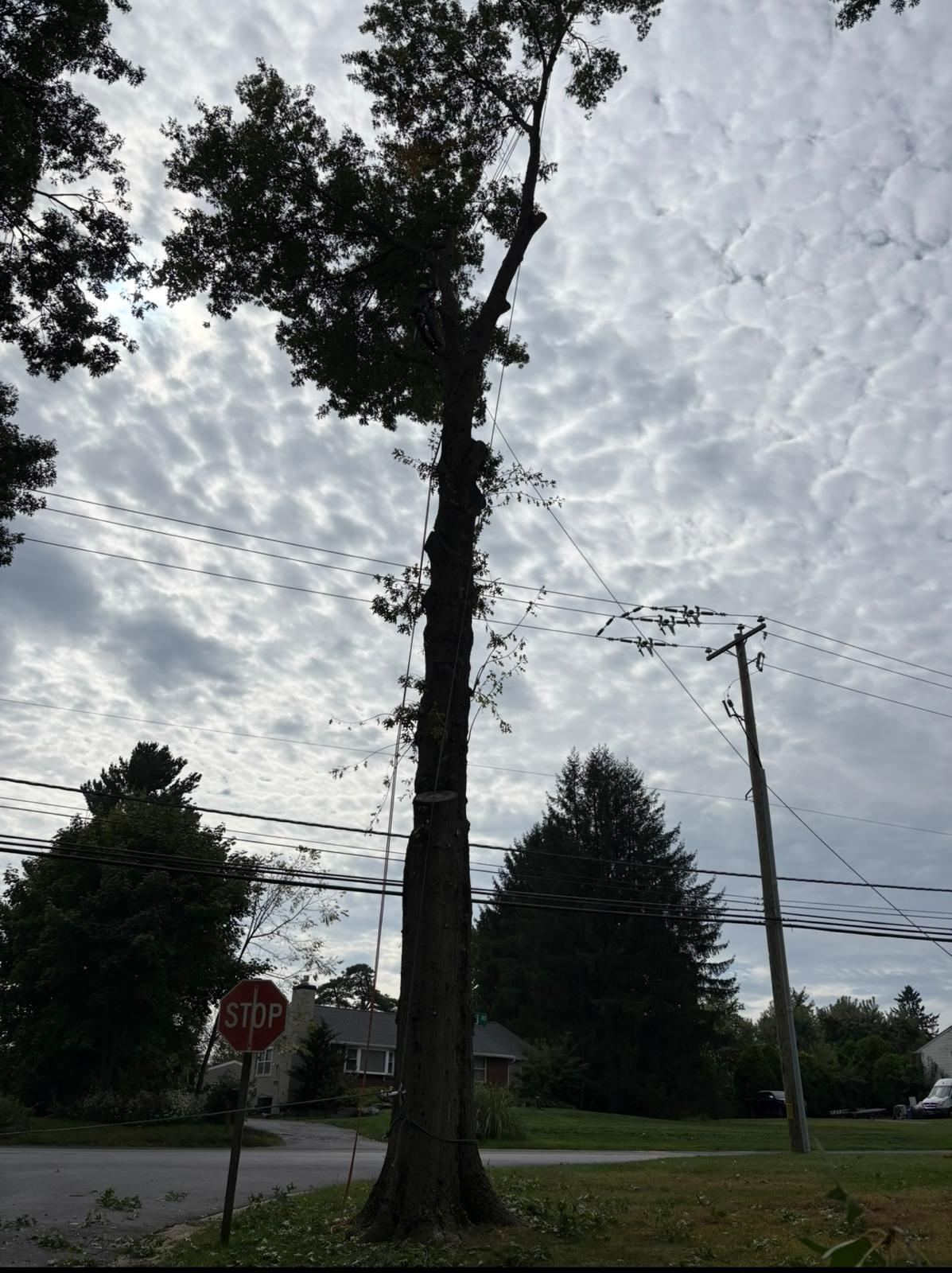
Ask the provider to assess the specific branch-to-feature conflict, the clearance you need, and whether selective pruning can address it while retaining the tree’s natural form. Describe where the branches are, what they approach or interfere with, and whether the concern changes with seasonal growth or use of the area. Share clear photos taken from a safe location, then ask what work is proposed, what it will and will not accomplish, and whether an on-site assessment is needed. The right scope depends on the tree and setting; a photo alone may not show branch structure or every relevant condition.
Describe the clearance concern
Start with the feature that needs clearance rather than a vague request to “cut back” a tree. Name the roof edge, walkway, driveway, sightline, lighting, or other area, and explain what is happening: a branch touches a surface, hangs over a route, blocks visibility, or may interfere as it grows. This gives the provider a practical objective to assess. It does not, by itself, establish that a particular branch should be removed.
Include the location of the tree and the side facing the concern. Note whether people regularly walk beneath the branches, vehicles use the area, or the issue is mainly about seasonal access or appearance. If you have noticed rubbing, a broken limb, or a change since leaves appeared, describe that observation without diagnosing the tree. The provider can determine whether the request is for clearance, maintenance, structural work, or another scope after reviewing the tree.
- Identify the feature and the exact area where clearance matters.
- Describe the interference you observe, not a cut you assume is needed.
- Mention seasonal use or growth patterns that affect the request.
Ask what the assessment will cover
Ask the provider to explain which branches they would consider and why. For example, clearance pruning may address branches interfering with a building, people, or visibility, while other observations could point to a different pruning objective. Ask how the proposed work would relate to the tree’s structure and natural shape, and whether the plan involves removing particular branches or reducing selected growth. A useful explanation connects the work to the concern you described instead of relying on a broad label such as “cleanup.”
Also ask what cannot be determined from your initial description or photographs. A picture can help show the location and the apparent conflict, but it may not reveal how a branch attaches, the full canopy, or conditions on the other side of the tree. If the provider needs to see the tree in person before defining the scope, ask what they need to inspect and what information will follow. For more on the service itself, see the details about [tree trimming and pruning](https://jacobtreeservices.com/tree-trimming/).
- Which branches or parts of the canopy are being considered?
- What is the objective: clearance, maintenance, or another defined need?
- What can be assessed from photos, and what requires an in-person review?
- How will the proposed work preserve the tree’s natural form?
Clarify scope and limits
Before scheduling, ask for a plain-language description of the work: which area of the tree is included, what clearance concern it addresses, and what is outside the request. Confirm whether the provider expects the work to address only the current interference or also a separately identified issue. If you want branches kept away from a particular feature, say so and ask how the provider will describe that objective. Avoid treating a desired outcome as a precise measurement unless the provider has assessed and agreed on a suitable scope.
Ask what the proposed pruning will not do. Trimming one area may not resolve a concern elsewhere in the canopy, and growth can change over time. If the tree’s size, shape, or condition makes the request more complex than simple clearance, ask whether the provider recommends a different scope or a further assessment. In New Jersey, you can ask what applicable licensing or other documentation relates to the specific work being proposed; do not assume that a particular credential or document applies without checking the scope.
- Request a description of the included work and any exclusions.
- Ask whether the plan addresses one conflict or several distinct concerns.
- Clarify what the work is not intended to accomplish.
- Ask what documentation is relevant to the proposed work in New Jersey.
Prepare a useful request
A concise request can combine the location, observed interference, seasonal context, and questions you want answered. For example, an illustrative request might say: “Several branches extend over the side walkway near the rear roof. The walkway is used more often in warmer months. Could you assess whether selective trimming can improve clearance, explain which branches are included, and let me know whether an on-site review is needed?” This is only a sample of how to describe a concern, not a report of a completed project or a recommendation for any particular tree.
If you send photos, take them from a safe place on the ground and include a wider view that shows the tree’s position relative to the feature, plus a closer view of the apparent interference if it is safe to do so. Do not climb, handle branches, or move anything to get a better image. Label the views by location, such as “front walkway” or “garage side,” and note when the concern is most noticeable. If a branch appears broken or the situation changes after a storm, say so when you contact the provider and ask what next step is appropriate.
- Name the tree’s location and the feature needing clearance.
- Describe what you observe and when it matters.
- Share safe, clearly labeled photos if available.
- Ask for the proposed objective, included work, limits, and any need for an on-site assessment.
- Review the written scope and raise any unclear points before scheduling.
A clear request describes the conflict and asks the provider to assess the appropriate scope; it does not prescribe cuts before the tree has been reviewed.
Common questions
Are photos enough to define the trimming work?
Photos can show where branches appear to approach a roof, walkway, or other feature, and they can help the provider understand your concern before a visit. They may not show branch attachments, the full canopy, or other conditions that affect the scope. Ask whether the images are enough for an initial discussion or whether the tree needs an in-person assessment before the work can be described. Take pictures only from a safe location; do not climb or handle branches to improve the view.
What if the clearance concern changes by season?
Explain when the area is used and when you notice the interference, such as during a particular season or after leaves emerge. That context helps the provider understand the practical objective, but it does not determine the right timing or amount of pruning on its own. Ask whether the proposed work addresses the concern you described and what limitations remain. The appropriate scope and timing depend on the tree, its setting, and the provider’s assessment.