Jacob Tree Services Blog
Tree Removal Scope: What Should Be Included in the Work Request?
A clear tree removal request identifies the tree, describes the requested work and cleanup, notes access constraints, and lists questions that need a site-specific answer. Use this guide to prepare a scope that can be discussed and compared without assuming every estimate includes the same tasks.
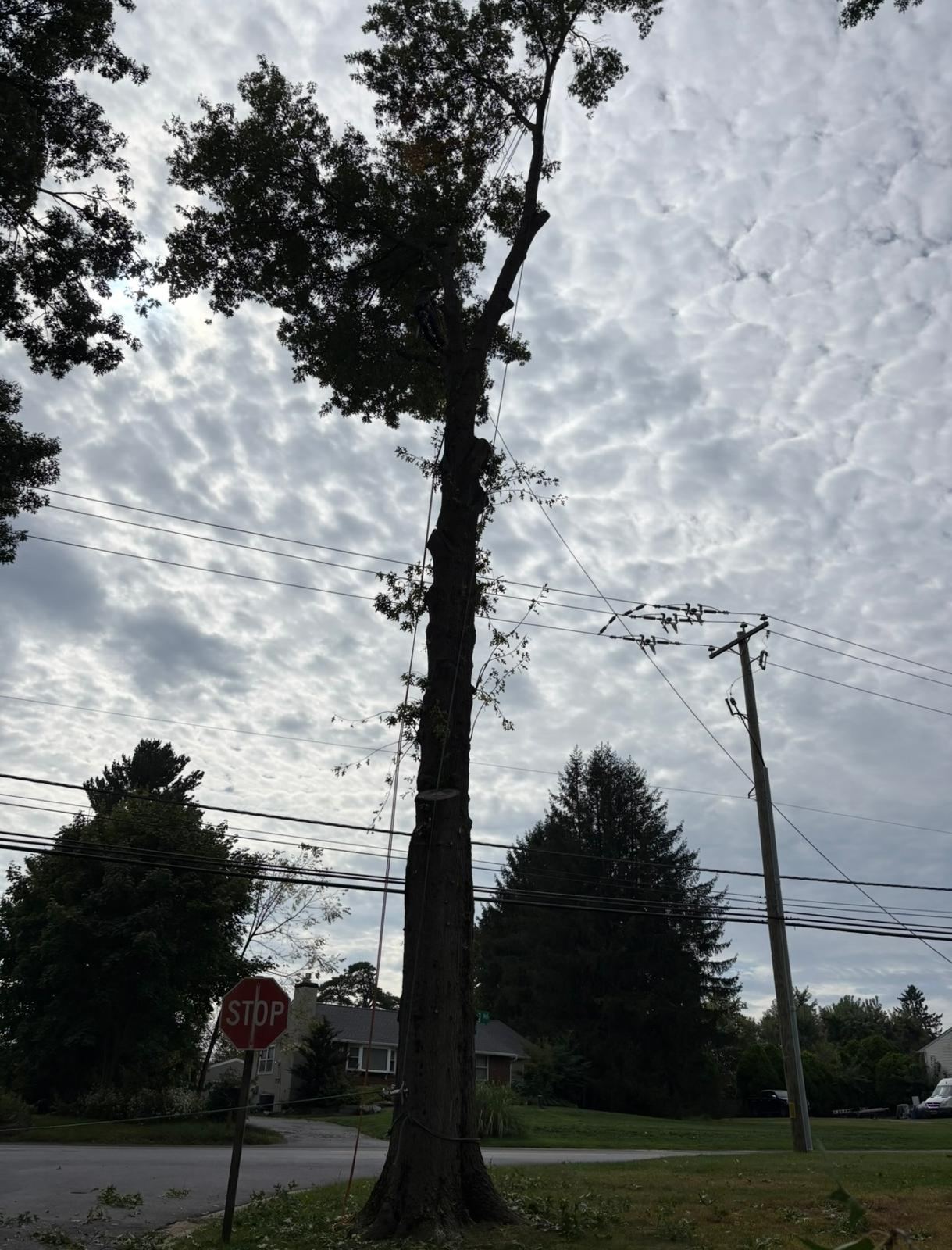
A useful tree removal request names the tree, describes what you want done, and spells out what should happen to the debris and work area afterward. Include access constraints, nearby features, and any related tasks you want considered, such as stump grinding. Ask the provider to identify what is included, excluded, or still uncertain in the estimate. This creates a shared scope for discussion; the final plan may change after an on-site assessment.
Identify the tree and requested outcome
Start by making it unmistakable which tree you mean. If there are several, describe its position in relation to a house, driveway, fence, or other fixed feature. A simple written label such as “the tree behind the garage” can help, but add a photo or marked-up overview when the description could fit more than one tree. Avoid assuming a photo alone shows every condition relevant to the work.
State the outcome you are requesting: removal of one identified tree, removal of several specified trees, or an assessment to discuss whether removal is appropriate. If you are unsure whether a tree needs removal, say so rather than presenting a decision as settled. The provider can then understand whether you are requesting a defined service or asking for a conversation about options. For service details, see the [tree removal service](https://jacobtreeservices.com/tree-removal/).
- Identify each tree separately, using a location description or a labeled photo.
- Say whether you are requesting removal or asking to discuss the appropriate scope.
- Mention visible concerns or context without diagnosing the tree.
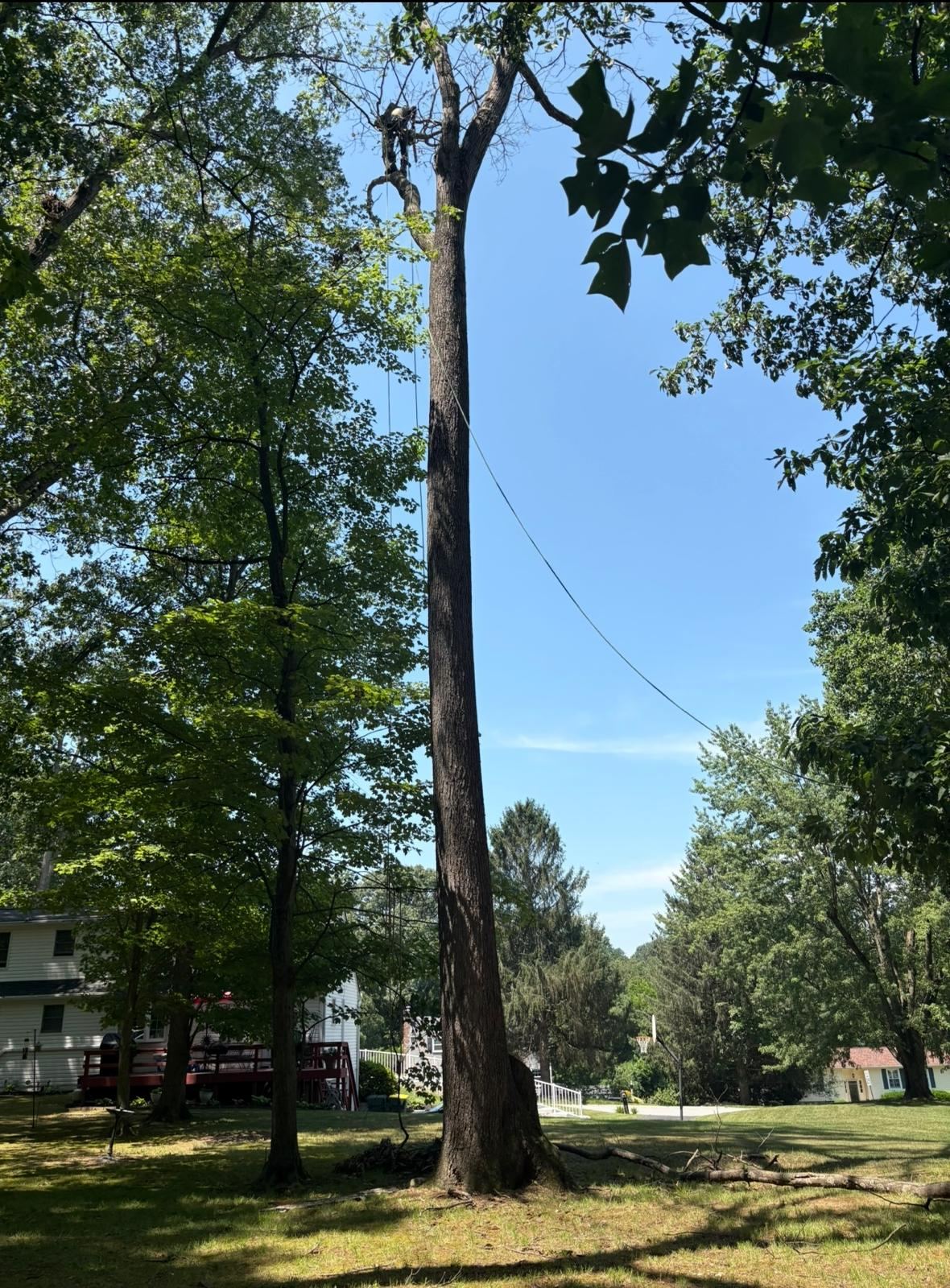
Specify cleanup and what happens to the stump
“Remove the tree” can leave practical questions unanswered. Describe what you expect to happen to the cut material: for example, whether you want branches and trunk sections removed from the property, or whether you want to discuss another arrangement. Ask the provider to state how debris handling is treated in the estimate. Do not assume that cutting down the tree, hauling material away, and leaving the site tidy are automatically one identical scope.
Address the stump separately. If you want it ground or removed, list that as a requested task and ask whether it is included in the proposed work or needs a separate estimate. Stump work is not the same as removing the above-ground tree, so a clear request helps avoid comparing one estimate that includes it with another that does not. If you have a preferred finish for the area, describe it as an expectation to discuss, not as a technical specification.
- Tree and branches: ask what material will be removed and what will remain.
- Stump: state whether grinding or removal should be considered.
- Work area: describe the cleanup you expect and ask how it is defined.
Describe access and property constraints
Include details that may affect how the work is approached: a narrow gate, limited driveway access, a fenced area, a garden, or nearby structures. Mention features you want the provider to notice, such as a patio, shed, planting bed, or surface you are concerned about. These details do not establish what equipment or method will be used; they help the provider assess the site and explain any constraints.
Share practical access information, including where a vehicle may enter or park and whether there are times when access is unavailable. If the tree is near overhead lines or there has been storm damage, report that clearly and let the provider assess the situation. Do not approach or handle a damaged tree or a potentially affected line to gather information. For storm-related concerns, describe what you can observe from a suitable distance and ask how the provider wants to assess the site.
- Note gates, fences, restricted routes, and access times.
- Point out nearby structures, landscaping, and surfaces of concern.
- Report storm damage or nearby overhead lines without approaching them.
Ask for a written, comparable scope
When discussing an estimate, ask the provider to describe the work in plain language: which tree or trees are included, what happens to the cut material, whether stump work is included, and what cleanup is planned. Ask what is excluded and which details cannot be confirmed until the site is assessed. If the proposal depends on access or another condition, ask for that condition to be stated so you know what could change the scope.
Compare estimates by matching tasks, not just by looking at a total. One proposal may cover tree removal only, while another may also address debris hauling or stump grinding. Ask follow-up questions where descriptions differ, and request clarification in writing before deciding. The scope and final approach depend on the property and the provider’s assessment; a request helps organize the conversation but cannot settle site-specific conditions in advance.
- Send the tree location, requested outcome, and relevant photos.
- List cleanup, stump, and access details as separate items.
- Ask the provider to mark each item included, excluded, or awaiting assessment.
- Compare proposals only after clarifying differences in scope.
A strong request makes the tree, requested tasks, cleanup expectations, and site constraints clear enough for a provider to assess and explain.
Common questions
Should stump grinding be part of the request?
Yes, if you want it considered. List stump grinding or removal separately from taking down the tree, then ask whether it is included, excluded, or priced as a separate task. This keeps the requested outcome clear and makes it easier to compare estimates that may cover different work. If you are undecided, say that you would like to discuss the option rather than assuming it belongs in the base scope.
What if I cannot identify the tree precisely?
Send a clear overview photo and describe the tree’s position using nearby fixed features. If there are multiple possible trees, label the one you mean on the image or provide separate descriptions. Ask the provider to confirm which tree is being discussed before the scope is finalized. Photos help communicate location, but they may not show every condition that needs an on-site assessment.